Why Dogs Go Missing at Christmas (And How to Reduce the Risk)
hwllo-sniffer.co.uk/why-dogs-go-missing-at-christmas-and-how-to-reduce-the-risk
December 18, 2025
Sniffer_Admin
Every Christmas, reports of missing dogs spike across the UK. This isn’t bad luck, and it isn’t because dogs suddenly become “naughty”.
From a behavioural and tracking perspective, the festive period creates a perfect storm of risk factors that significantly increase the likelihood of dogs escaping, bolting, or becoming lost. Rescue organisations, councils, and lost-dog networks consistently report noticeable increases in cases between late November and early January.
Understanding what’s really going on helps owners shift from panic-driven searching to calm, practical prevention and faster, more effective recovery when things do go wrong.
Why Christmas Is a High-Risk Time for Dogs
Dogs don’t disappear randomly. Almost every lost-dog case follows a recognisable pattern involving elevated stress, disrupted routines, and small management lapses that combine at the wrong moment.
At Christmas, those risks multiply:
- Visiting unfamiliar houses, streets, or villages
- Gardens and boundaries that haven’t been dog-checked
- Doors and gates opening constantly with guests coming and going
- Darker afternoons and evenings
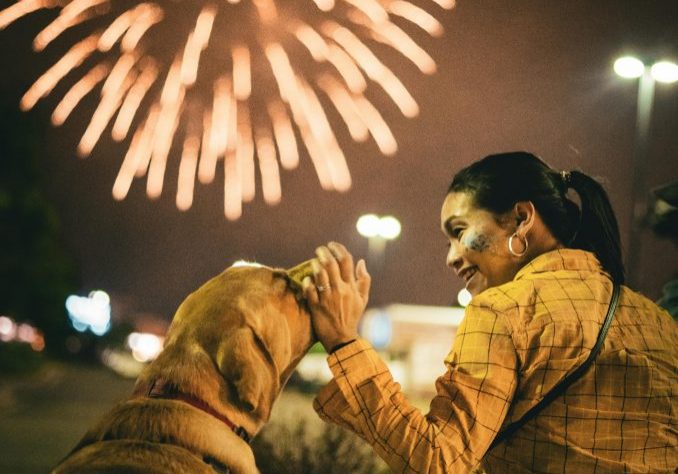
- Fireworks, party noise, and sudden bangs
- Busy homes, raised energy, and overstimulation
- Changes to walking times, feeding routines, and sleep
Each of these factors alone may be manageable. Together, they increase arousal levels, reduce predictability, and lower a dog’s ability to cope, particularly for dogs that are already noise-sensitive, anxious, excitable, adolescent, or newly adopted.
For these dogs, Christmas doesn’t feel festive. It feels unpredictable.
Unfamiliar Places = Lost Bearings
Dogs rely heavily on familiarity. Familiar smells, visual landmarks, and repeated routes form an internal “map” that helps them orient themselves and regulate stress.
When dogs are taken to new environments:
- Recall often becomes less reliable
- Startle responses are stronger
- A simple escape can quickly turn into disorientation
Tracking data consistently shows that dogs who escape in unfamiliar areas are far more likely to travel further, move faster, and struggle to self-navigate back, compared to dogs lost near home.
This is why dogs lost while visiting family often don’t “circle back”. Without scent anchors or learned routes, they keep moving, not because they don’t want to return, but because they can’t orient themselves safely.
Doors, Gates, and the Human Factor
Many Christmas escapes aren’t about canine behaviour at all, they’re about logistics.
Common scenarios include:
- A guest leaving a gate ajar
- Someone letting the dog out “just for a second”
- Assuming fencing is secure without checking
- Collars or harnesses slipping during transitions
In lost-dog tracking cases, doorways, driveways, and garden gates repeatedly appear as last-seen locations. High foot traffic increases opportunity, and dogs only need a single unguarded moment.
Crucially, these incidents often happen when everyone believes someone else is watching the dog.
Noise, Fireworks, and the Bolt Response
Sudden noise is one of the most common triggers for dogs going missing at Christmas.
Fireworks, party poppers, shouting, dropped objects, clattering dishes, or loud music can all activate a dog’s startle-and-flight response.
Once a dog crosses this stress threshold:
- Rational processing drops
- Learned cues often fail
- Movement becomes reflexive, not deliberate
Dogs that bolt aren’t being disobedient, they are responding to what their nervous system perceives as an immediate threat. In this state, distance increases rapidly, and recall reliability drops sharply.
Short Days, Slower Responses
Dark afternoons and evenings increase risk in quieter, less obvious ways:
- Dogs are harder to visually supervise in gardens
- Escapes are less likely to be noticed immediately
- Identification becomes more difficult
The longer it takes to realise a dog is missing, the further they can travel, particularly during high-arousal escapes. Early awareness is one of the most important predictors of successful recovery.
In winter conditions, even a delay of 10–15 minutes can significantly change a search area.
Social Gatherings and Cumulative Stress
Christmas stress isn’t always dramatic. More often, it builds gradually.
Dogs may cope for hours before showing signs such as pacing, panting, withdrawal, hypervigilance, or restlessness. Stress is cumulative, not linear.
One sudden noise or unexpected interaction after a long, busy day can be enough to tip a dog into flight mode, even if they appeared “fine” earlier.
This delayed response often catches owners off guard.
Practical Ways to Reduce the Risk This Christmas
Risk reduction is about management, not perfection.
Assume nothing is secure
Check gates, fencing, and doors at every location, including familiar homes. Temporary barriers, door signs, or visual reminders help reduce assumptions.
Use backup equipment
Well-fitted harnesses with secure attachments significantly reduce the risk of slips during arrivals, exits, and transitions.
Keep ID current
Collars, tags, and microchip details should always be up to date, especially when travelling or staying overnight elsewhere.
Advocate for your dog
Tell guests clearly not to let your dog out or interact without checking. Most accidents happen through kindness and misunderstanding, not negligence.
Manage stimulation, not just behaviour
Quiet spaces, decompression walks, and structured rest periods are often more effective than trying to “train through” excitement.
Consider what’s best for your dog
For some dogs, staying home with structured care is safer than attending busy gatherings, and that’s a responsible choice, not a failure.
Why Tracking Matters
When a dog does escape, time is critical.
A GPS tracker allows owners to see movement patterns in real time, respond immediately, and avoid delayed searches based on sightings, social media lag, or guesswork.
Tracking doesn’t replace prevention, but it dramatically reduces panic, search radius, and recovery time when the unexpected happens.
It turns uncertainty into information, and information into action.
Final Thought
When dogs go missing at Christmas, owners often say, “Nothing seemed wrong.”
From a behavioural and tracking perspective, the warning signs were usually present, just easy to miss amid festive distraction.
Prevention isn’t about control.
It’s about understanding stress thresholds, managing environments, and respecting how dogs experience the world.
A calm, contained Christmas is one of the most effective safety measures you can give your dog, and a tracker is your safety net if things don’t go to plan.